
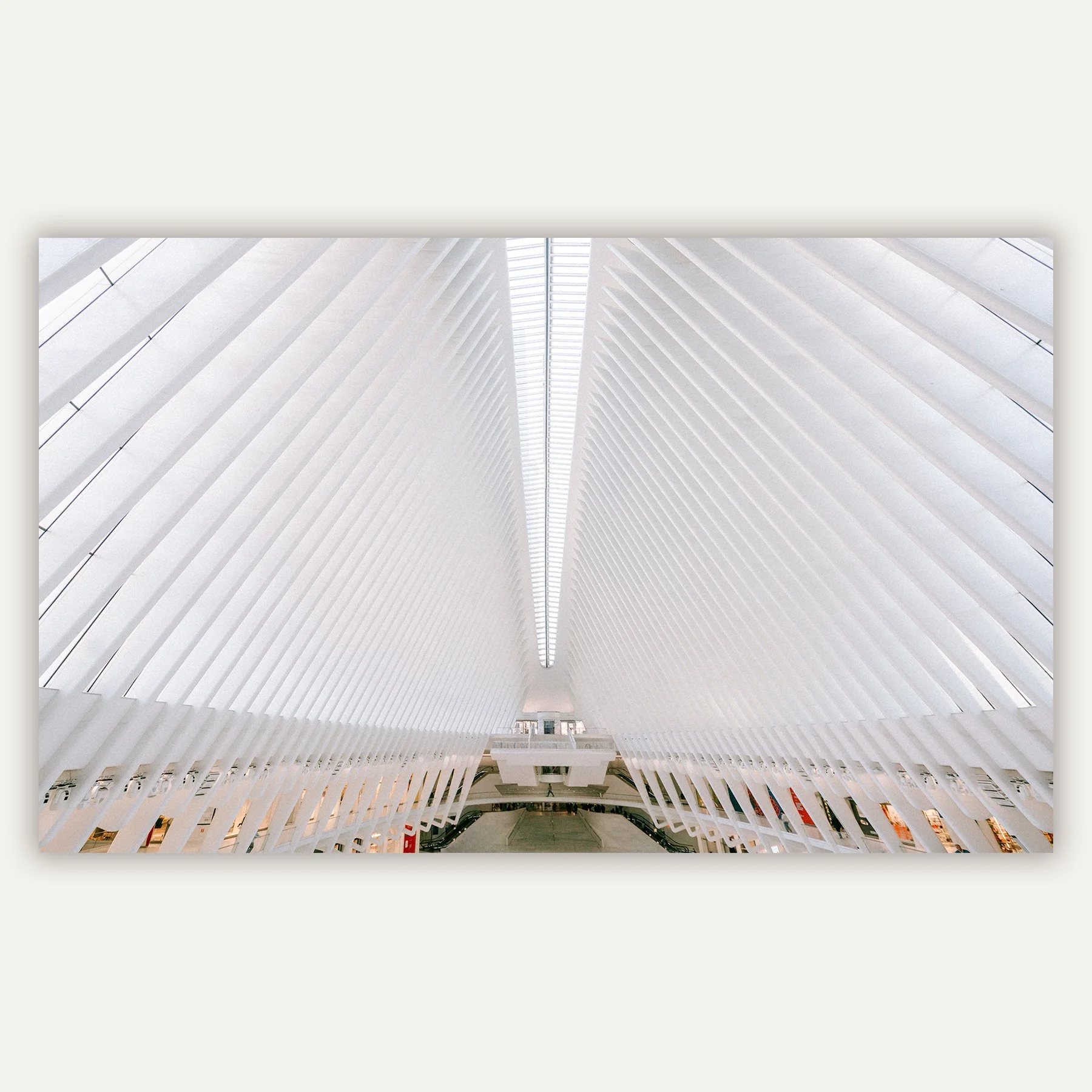

Typically, my eyes and heart are drawn toward old, classical architecture. Modern, stark, and contemporary designs usually land themselves firmly on my personal no-fly list. But the Oculus at the World Trade Center was one building that immediately caught my attention, standing in sharp — literally — contrast to everything else surrounding it in the city skyline.
At first, I couldn’t quite figure out what the design was meant to represent, but like all great architecture, I knew there had to be meaning behind it — especially considering where it stands and what once stood there almost twenty-five years ago.
Designed by Spanish architect and engineer Santiago Calatrava, the structure was intended to resemble a bird being released from the hands of a child; a symbol of hope rising from a place where hope once felt entirely lost. And there I was, completely entranced by this architectural feat that, although contemporary in style, held a tremendous amount of meaning both of hope and tragedy.
While places like the Oculus stand as reminders of resilience after loss, other parts of the city seem to hold something lighter. Joy. Excitement. Forward motion. (both figuratively and literally). The kind found in reunions after years apart, rushing to catch a train home to family, or heading toward a future you worked incredibly hard to build.
Original, single-shot photograph